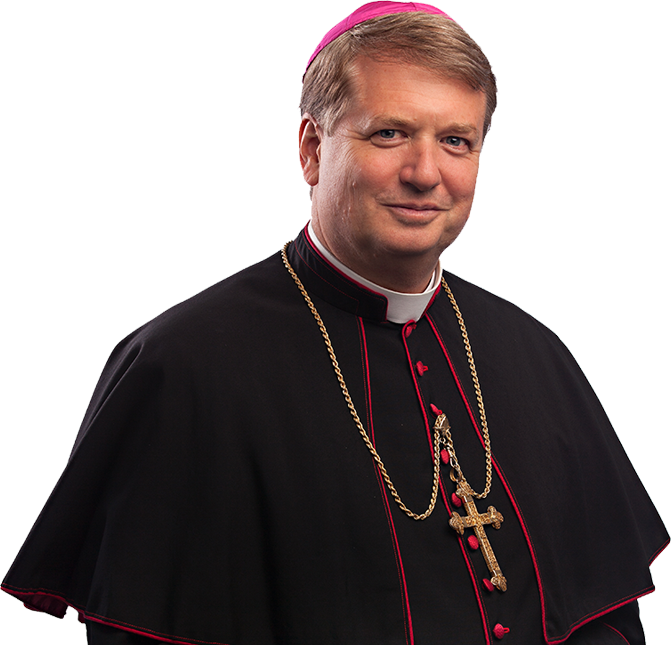
+ Cardinal George Pell, Archbishop of Sydney
15 Jan 2012
Late last year the Catholic Church throughout the whole English-speaking world introduced a new translation of the Roman Missal, which contains all the prayers used to celebrate the Eucharist.
For about fourteen hundred years the Mass had been celebrated in Latin in most countries. Other Catholic communities e.g. Melchites, Maronites, Ukrainians use other languages and somewhat different prayers, while remaining constituent churches under the Pope.
This was not the tradition of most Australian Catholics, so I grew up attending Latin masses. A knowledge of Latin was necessary for training as a Catholic priest and most of our seminary text books were in Latin.
Therefore the "old" translation that was replaced only dated from about 1970, but was still old enough for a couple of generations to know nothing else. Pope Benedict recommended that the changes be introduced "with due sensitivity" and across Australia careful preparation and explanation accompanied this gradual process.
Surveys show that most Catholic parents send their children to Catholic schools because of good academic outcomes and a strong moral framework, but these same surveys show that people come to Mass to pray, to join in an act of worship.
Not surprisingly therefore the new texts are more formal and less like the everyday speech used at a barbecue. They strive more effectively to evoke the mystery of God, while the translations from the Latin are accurate and precise, occasionally causing listeners to pause and think.
Some worried that migrant communities in Australia and e.g. African villagers would find the language too formal. Despite some difficult words (consubstantial), the texts have been well received there because they are closer to the liturgical language in their tongues. People can and will learn a new word or two.
Each tradition has developed a distinctive style and while the Roman rite evolved from Jewish worship it also incorporated elements from the best pagan Latin prayers: concise, elegant and rich in meaning and nuance.
Eighty per cent of these prayers are more than 1000 years old, indicative of a rich, slowly evolving tradition full of Biblical imagery and language.
Spanish-speakers use two or three versions of a Mass text, while many English versions of the Bible are in use.
A single English Mass text, approved by all the bishops' conferences including the North Americans, is an important achievement; appropriate too because English is the new Latin, the new universal language.