News

Students' Flourish at Notre Dame

Catholic Communications, Sydney Archdiocese,
11 Jan 2010

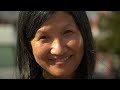
Professor Celia Hammond

Professor Celia Hammond, Vice Chancellor of the University of Notre Dame, Australia says while the nation's newest university may not appeal to everyone, those who want to develop all aspects of themselves, will flourish under its individual support system and unique student community.

"For students who want to graduate with a broad education that goes beyond training for a specific job or career then Notre Dame is the right place," she tells Catholic Communications.

As most of the country's 2009's school leavers worry about their HSC marks and nervously wait until late January to see if their university applications have been successful, the University of Notre Dame, Australia (UNDA) has already processed thousands of applications and sent out its first round of offers.
A second round of offers from UNDA will be sent out in early February but according to Notre Dame's Admission's Centre, there is not cut-off point for applications, nor do any of the courses offered have quotas.

Criteria for admission to UNDA is also unique. Unlike most Australian universities which use State university admissions centres to process their enrolment applications, Notre Dame deals with its own undergraduate and postgraduate applications. But here again it is unique and while HSC results form a part of the process, each student is also interviewed and their personal qualities, specific talents, study motivations and the contributions they have made to their schools and communities, are considered before an offer is made.

"We seek to graduate students with a better understanding of the world and their role in it, and an understanding that is not individualistic and self-serving but compassionate, faith-filled, just, decent and honest," Professor Hammond says, adding that these demands are a vital part of the Catholic intellectual tradition.

For this reason all students at UNDA, regardless of their particular faith or the courses in which they have enrolled, their curriculum must include the study of ethics, philosophy and theology as part of their degree. Studying these core subjects is compulsory for all students and according to Professor Hammond help provide a broader more rounded tertiary education as well as instilling humane and compassionate values.

"Knowledge without a context or framework of humanity is hollow," she says. "Being taught that the thighbone is connected to the kneebone and understanding how to reconnect them should they break, is useful. But if you are incapable of understanding or empathising with the human being whose bone is broken, if you cannot recognise and address their fears, their concerns and their humanity, your ability to help will be limited."

Professor Hammond remembers her own early days after graduating from law school and her first job in a legal firm in Perth.

Students at the University of Notre Dame, Australia

"I was not long out of law school and I'd been given a file and asked to look after an elderly farmer who was going through bankruptcy, " she recalls. "I was in my early 20s and had always lived a comfortable life at home and suddenly I was faced with a situation of a man in his 60s who was faced with losing everything after working hard all his life. He was a delightful man but I didn't really know how to deal with the situation. I was professional of course and could do the legal side of things. But what was also needed was the personal side of things and empathy and compassion and an appreciation of what he was going through emotionally."

Luckily for the farmer, Professor Hammond had had the necessary qualities to understand and empathise with his plight.

"Compassion and caring for other people had been ingrained in me by a loving family and by the Catholic schools I attended growing up," she says. 

But what startled her was the fact that although her Catholic primary and secondary school teachers had emphasised these qualities, they were never addressed or even touched on during the five years she studied law at university.

As head of the Fremantle campus' law school before being appointed to her current position as Vice Chancellor of the entire university with its campuses in Fremantle, Broome and Sydney, staff of more than 450 and its 10,000 students, Professor Hammond has been determined to change this.

Eager for students develop their humanity, compassion and empathy, and realise these qualities are not only a part of what it means to be Christian and a Catholic but play a vital role in our working lives and are as important in our careers as the acquisition of professional skills.
 
Bringing an examination of ethics into the lectures she gave on law during her time as head of the faculty, was one of the most rewarding features of her time at Notre Dame, she says and adds that because of the university's Catholic environment it was possible to teach law, then hold sessions with students asking questions about ethics and how they would deal with different situations.

Ethics as a core subject is unique to UNDA and its value spreads across all fields of study from, nursing to medicine to finance and commerce as well as the arts and law.

UNDA's Broome Campus

To many Australians the idea of a Catholic university may seem novel, but Professor Hammond is quick to point out that there is the tradition of Catholic universities goes back to Medieval times, pointing out that most of the renowned secular universities of Europe and Britain, including Oxford, Cambridge, the University of Paris and the University of Bologna began life as religious institutions.

The daughter of the former chief judge of the District Court of Western Australia, Judge Kevin Hammond, the 41-year-old Vice Chancellor says she grew up torn between wanting to be a teacher like her mother or a lawyer like her father.

"I wanted to be a teacher for some years but I also loved logic and reasoning and liked the idea of using logical argument and reasoning to help solve problems and help people," she says.

Studying law, she also discovered the contributions made to jurisprudence by such great Catholic scholars as St Thomas Aquinas and Sir Thomas More.

After graduating from the University of Western Australia, she worked in private legal practice before joining the University of Notre Dame 11 years ago, shortly after the establishment of its first campus in Fremantle. As well as teaching, Professor Hammond was appointed to senior administrative roles and in August 2008, took over from Dr Peter Tannock when he retired as Vice Chancellor.

As the mother of three sons, Samuel, Joshua and Thomas aged 7, 5 and 4, Professor Hammond admits taking on the job of Vice Chancellor would have been impossible without the unstintintg support of her husband, Simon.

"He works one day a week and the rest of the time is a stay at home Dad. I am so fortunate to have such a supportive husband and as a family, the arrangement works brilliantly. It might not work for everyone and in a lot of instances families do not have a choice. But Simon and I are very fortunate to be able to do this," she says.

At 39 when she was appointed Vice Chancellor two years ago, Professor Hammond is the youngest Vice Chancellor of a university in Australia, one of the few women in such a position and full of enthusiasm and smarts, oversees an institution that is not only the newest kid on the block but which is already seen as brightest star in Australia's tertiary education system.

Granted a charter by the government of WA in 1989, the University of Notre Dame Australia was initially established to provide specific training for the large numbers of lay professionals who would be needed in the future to teach and be part of the nation's extensive Catholic school system as well as be employed by its large network of Catholic hospitals and medical institutions. With a campus in Fremantle, UNDA enrolled its first students in 1992.
 
Within a short time though, the university expanded opening its doors to undergraduates as well as post graduates and in addition to education and nursing, began offering courses in law, science, philosophy and ethics. A campus at Broome followed with an emphasis on teaching and the study of indigenous issues, where in an Australian-first, Lyn Henderson-Yates an Aborginal woman, academic and expert on education was appointed Deputy Vice Chancellor.

Then in 2006, the University of Notre Dame opened its Sydney campus and in three short years has earned itself a reputation for high scholastic achievement and admiration for its one-to-one relationship with students.

"At all three of our campuses, we pride ourselves on our focus on each individual student in our care and on respecting each one of them as an individual and supporting them in every way we can," Professor Hammond says.

A Catholic university such as Notre Dame has a strong pastoral care program which caters to the whole person, not just their academic needs, she explains and adds that although UNDA provides higher education and learning much as other universities do, it delivers this "within the context of Catholic faith and values."

But it is not only Catholics who are enrolling at Notre Dame and quite a few students are from other Christian faiths or no faiths at all. But even if they are not Catholic or religious in any way, it seems they are after an education where ethics and philosophy are discussed along with the deeper more profound meaning of life.

Whatever the reason, they along with thousands of young Catholics are enrolling at Notre Dame and applications for undergraduate and postgraduate courses for 2010 are up by almost 11 percent.
 
The Sydney campus might be the newest, but this year's enrolment applications are breaking records for all courses including law, medicine, nursing, education, behavioural science, communications, philosophy, sociology, finance and commerce, communications and theology.

More than 3000 students are expected to attend the Sydney campus of UNDA this year which plans to expand this number to 5000 within the next five years.

To find out more about UNDA and the courses it offers and how to apply, log on to www.nda.edu.au.