News

Print   Email a friend  

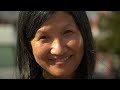
Mother's Day Special: Marisa Opens Her Heart

Catholic Communications, Sydney Archdiocese,
8 May 2009

When Sydney mother-of-three, Marisa Donato came across a Parish bulletin asking for families to foster children in need, she volunteered.

"I talked it over with my husband and our kids and we decided we had room in our hearts and room in our home," she says, and with a broad smile adds: "My husband and I also thought that as we hadn't done such a bad job with our own kids, so we should put up our hands."

At the time, the couple's children ranged in age from six to 13.

"They weren't quite teenagers so we were blinded by the light," Marisa jokes.

Eleven years on, two of the children are now adults. Michael at 23 is studying for a career in welfare while, Analise who is 21, is studying for a business degree. Dominic is the youngest at 17, and currently in his final year at school and studying for his HSC.

All three still live at home and continue to help their mother, who uses her maiden name and their Dad, agricultural adviser, Lawrence Ullio with the care of the young foster children who arrive at their door, needing love, safety and security.

As a foster mother with CatholicCare, Marisa and her family have given comfort and refuge to countless children. Over the years, some have stayed as briefly as one night or a weekend. But most have stayed far longer and several have lived with the Ullios as part of their family for as long as two years.

"When foster families offer permanent care, the child remains with them virtually until they leave home and marry. But I concentrate on short term and emergency care," Marisa explains.

The children fostered by CatholicCare are sometimes self-referrals, sometimes referred by community groups and most often from the NSW Department of Children's Services. Frequently, when it's an emergency, Marisa receives very little notice and they can arrive at midnight or even later.

But with her house equipped with nappies, bottles, baby food, clothes for toddlers up to five and six year olds and a bassinet, two strollers and a cot, not to mention a local backup network of pediatricians, dentists and speech therapists, Marisa is ready for any emergency.

Some of those put into temporary foster care with the Ullios come from distressed or troubled backgrounds. Others have been put in short term care because a parent has become ill or needs an operation and is unable to look after them.

Others may be single or working parents who have relocated to Sydney and have turned to CatholicCare for Help. Marisa explains that strangers to a new city frequently have no extended family to call on and no back up support from friends.

"The family is not in trouble and frequently all the mother needs is a weekend off and a safe secure place for her children to stay," she says.

Many children the Ullio family cares for, however, come from families in crisis or from families where parents are temporarily unable to care for their kids because of alcohol, drugs or mental problems.

"But this does not mean that these children are unloved or that they came from an unloving environment," Marisa insists. Eager to dispel what she calls some of the myths surrounding foster care, she says that in most cases, whatever their problems, the parents love their children very much and the children love them in return.

"It is important that these birth parents be acknowledged," she says, adding that since she and her husband began fostering, they have always been known to their small charges as "Risa" and "Lawrence," never as Mum and Dad.

"No matter what the circumstances, the child's Mum and Dad will always be Mum and Dad. They share the same DNA and this is key, no matter what the parent might have done to them," she explains.

Astute and attuned, Marisa can immediately tell which children have come from a loving background.

"These are the ones who respond quickly to love and affection," she says.

But tragically some of the children Marisa has taken care of have not known love and have undergone tremendous suffering. Arriving at the Ullio household, they are often traumatized or suspicious, full of pain and distrust. To reach these children and gain their trust, patience, compassion, sensitivity and awareness of the child's specific emotional and physical needs is all important.

"So too is a knowledge of one's own limitations," says Marisa.

Children who are traumatised can be a challenge, she admits, and they can often exhibit destructive or difficult behaviours.

"There's no china left in my house and my children learned early to put their precious things away and out of reach," Marisa says with a smile. "But they coped with that and became my rocks and chief supports."

Marisa gives full credit to her three children and says too often a foster carer's birth children are not given enough credit for the vital role they play.

"Everyone forgets that your birth children are also acting as carers and how much we need their input and support," she says, adding how proud she is of Analise, Michael and Dominic, their intuitive generous natures, and the way they give their time to help each particular child.

"If a child has come out of a domestic violence situation, loud noises and voices can agitate and distress them," Marisa explains. "With these children, my kids are particularly perceptive and completely unselfish. Without telling them, they'll tone everything down and the boys even cease their rumbles and wrestles, giving the child a calm space in which to slowly adjust."

Although a mother's first instinct - particularly for one as warm and outgoing as Marisa – is to comfort a child by offering physical affection, for children in crisis, it is not always the best option.

"Some children are so traumatised that they do not want to be touched, and back away from any attempt at a hug," says Marisa. "Other children may have a fear of water so that instead of a bath, you have to get them used to washing gradually until they are confident at having water on their bodies."

Winning the trust of such children can take considerable time, she warns, and requires not only the foster mother but the entire family pitching in to help.

But even then, it does not always work.

"That's why it is important to know your limitations," she says, explaining that occasionally, despite everyone's best efforts for a particular child, it simply doesn't work.

"Sometimes your efforts help and complement a child. But not always, and it's important to recognize when it's not working and realise that the child may do better with another carer rather than with you," she says.

But most of the children the Ullios have cared for are success stories, with one young teen who lived with them for 18 months from the time he was seven still in touch with them almost a decade later.

"We keep a bed for him in our family room along with his own drawer with his sets of clothes, and he drops in to spend weekends with us or part of his school holidays," Marisa says.

The young man is now part of the Ullio's extended family, where Marisa insists she's the disciplinarian and Lawrence, the "comforter" and "the soft touch."

"The little ones adore Lawrence and know he's the one to go to when they want a special treat, such as an ice cream or a cuddle," she smiles.

These days Marisa not only takes in short term foster children and those in emergency situations, but has become one of the trainers of prospective foster families.

Fostering a child, she says can bring great joy. But she warns that it can also be confronting and gruelling. In some cases, the cruelty and damage inflicted on her innocent young charges have left Marisa full of fury and in shock.

"It can be very testing to your faith when you try to work out why God could let this happen to such a helpless little child. But I have learned to remind myself that I am the carer of the child, that this is what comes first. I am not the carer of the situation, no matter how much I sometimes want to punch somebody's lights out," she says with a smile.

But for Marisa it is the effect fostering children has had on her own three kids that makes it so worthwhile.

"They are completely unselfish. They share everything and find joy in that. They are also full of compassion and non judgmental. I am so proud of them. They are the most wonderful kids in the world."

Print   Email a friend