News

Aboriginal Academic Creates an Australian First

Catholic Communications, Sydney Archdiocese,
29 Oct 2009

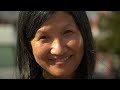
As the first-ever Aboriginal Deputy Vice Chancellor of an Australian university, Professor Lyn Henderson-Yates is an inspiration to students and staff across the country.

In charge of the Broome Campus of the University of Notre Dame Australia, Professor Henderson-Yates took up her new role on March 31 this year and will shortly graduate with a Ph.D in philosophy, adding to an already impressive array of qualifications.

"Lyn is absolutely brilliant and her contribution to Aboriginal education has been remarkable," says Professor Celia Hammond, Vice Chancellor of the University of Notre Dame Australia. "She empowers students as well as the staff on the Broome campus which has a special mission to promote reconciliation. We are extremely lucky to have her."

For the past 31 years, Professor Henderson-Yates has worked in education and prior to her appointment as the Broome university's Deputy Vice Chancellor, she was Assistant Dean of the campus' School of Arts and Sciences as well as its Director of the Nulungu Centre for Indigenous Studies, a role she retains.

For many years she has been a leader in teaching and research, particularly in the fields of Aboriginal history, education, identity, human rights, racism and oral history.

There is no doubt this warm, down-to-earth, dedicated mother of two has broken new ground both as an academic and as an indigenous Australian. Her achievements are certainly impressive, but she insists they definitely would not have been possible without the strong support, encouragement and resilience of her mother, Evelyn, her uncle Richard and her aunts, Marjie and Dot who were the sisters of her father, who died when she was just two years old. She also gives credit for the help given her by her various teachers, particularly visionary and a leader in Aboriginal education, St John of God Sister Leone Collins of the Holy Rosary School where Professor Henderson-Yates had her first job as an Aboriginal Teaching Assistant.

Growing up in Derby in the Kimberley, the Professor was the eldest of eight children and vividly remembers moving with her family from a house in Derby to some land about eight kilometres out of town when she was 12 years old.

"There was just a block with no place for us to live. All we had was a boab tree," she recalls. "The first thing we had to do was go out bush and cut some tree trucks to make frames for two large tents each side of the boab tree. We children slept in one and the other became the kitchen. It was also where my mother and my stepfather slept."

Water had to be carted to the land in 44 gallon drums and lighting came from kerosene and tilly lamps which were lit each night at sundown.

The site of the land, where the Professor's mother and stepfather would build the family home, was five minutes from a rubbish dump where the children would scavenge for tereasures.

"Once I found a beautifu8l pair of low heeled sling back shoes. They were pink with large orange dots. I thought they were beautiful," she laughs remembering how as a 13 year old she insisted on wearing them school despite her mother's wise warning not to, pointing out they might belong to someone there.

"But I was in love with them, so off I went in my 'new' high heels picking my way very delicately and as ladylike as I could, given I was walking through the bush where there was no path or road, and feeling quite glamorous."

But once at school one of the most popular non-Aboriginal girls with "blonde hair and lovely blue eyes rushed up to me and said "Those are my shoes. My mum threw them out at the rubbish dump."

"No they're not," she replied covering her embarrassment by insisting her aunty in Perth had bought them for her and claiming she had a letter to prove it.

But the pink and orange spotted shoes had lost their appeal and despite her defiance, the Professor says she hid them under her desk and never wore them again.

At 14, she says she was sent to Perth with her sister to stay with her Aunty Marjie and Uncle Ray, and enrolled at Melville Senior High School. "We had to learn to wear a school uniform, and shoes and socks," she says adding that her aunt tells her that the biggest challenge for her and her uncle was instilling the two girls with the importance of time and how a bus wouldn't wait if they weren't at the bus stop in time.

After completing year 10, the Professor enrolled in a secretarial course. She graduated but discovered she had no desire to be a secretary and returned to Derby where she married and had two children. Then in 1978, while her children were still very young, she began working at the Holy Rosary School as an Aboriginal Teaching Assistant. Encouraged by Sister Leone, she would go on to obtain her HSC and began external studies for a Diploma of Primary Teaching.

Teaching was her love but when her daughter and daughter began secondary school in Perth, she moved to the city as well. While there while working part time with the WA Catholic  Education, she enrolled at University to convert her diploma to a Bachelor of Education, and having completed this went on to do her Master's degree. This led to a job as deputy principal of Clontarf Aboriginal College in Perth, where she decided to return to University yet again, this time for a Ph.D in Philosophy.

During her studies, she lectured at Curtin University in the Centre for Aboriginal Studies and in 2006 became Assistant Dean at the Broome Campus of the University of Notre Dame Australia.

"For every experience I have had in my life, there have been people guiding and supporting me as well as organisations which have believed in the need to provide the bridges and pathways to help me and other Aboriginal students to reach our goals," she says. "Without strong visionaries and without courageous individuals and organisations offering all people and communities the chance to grow and reach their potential, the ability to change one's personal circumstances whether they are Aboriginal or Non Aboriginal, will be severely limited."

Now as head of the Broome campus, Professor Lyn Henderson-Yates is providing inspiration, vision and support to young people and helping them realise their full potential and giving them a helping hand so that no matter what disadvantage or hardship they might have known, they realise great possibilities exist and that these can be achieved.